Less screen time. More dirt and wonder. One small basket of tools that fits in your morning.
We make field decks, journals, parent guides, kitchen-table lessons, and porch-day activity cards for families who want to raise kids who know the trees, the recipes, the rhythms — and the place they're from.
Made in Bristol, Tennessee · Charlotte Mason–friendly · Faith-friendly · For families who'd rather not raise kids on screens.
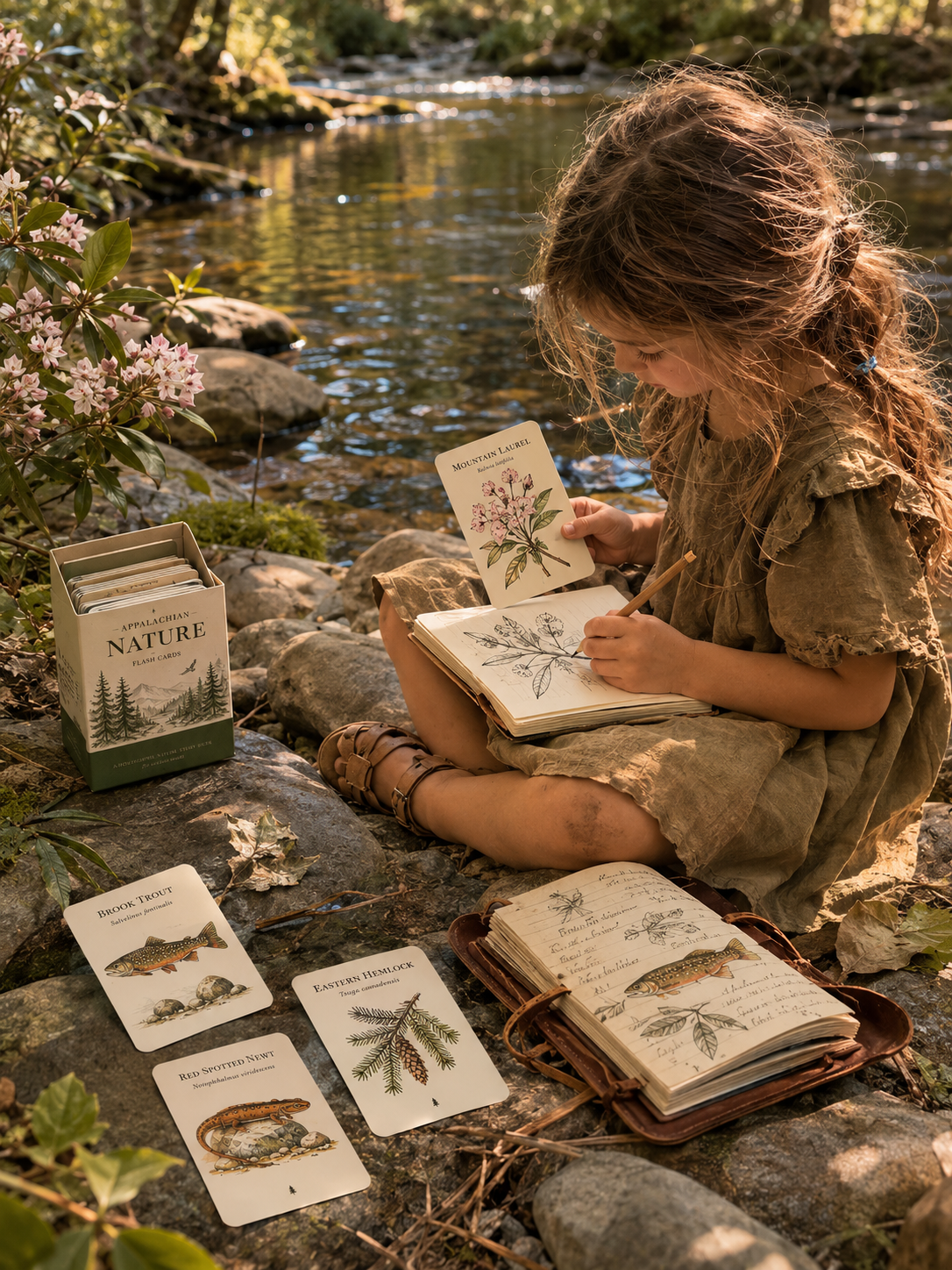
You don't need another curriculum, another printable bundle, or another laminating project. You need beautiful, open-and-go tools that turn a 20-minute walk, a 15-minute kitchen prep, or a slow Sunday afternoon into actual school. Here's what we build for.
Tools that pull kids outside, into the kitchen, onto the porch — not into a tab.
Our cards name the trees in your actual backyard. Not stock photo "tree." Eastern Hemlock.
Linen-finish cards. Real spiral-bound journals (leather upgrade coming). Kept and passed down — not thrown away by Tuesday.
Designed to fit your morning basket without becoming another 45-minute subject to manage.
Four ways to begin: the Nature School Starter Kit, Porch & Parlor Activity Deck, Hollow & Holler Tales, or Kitchen Table School.
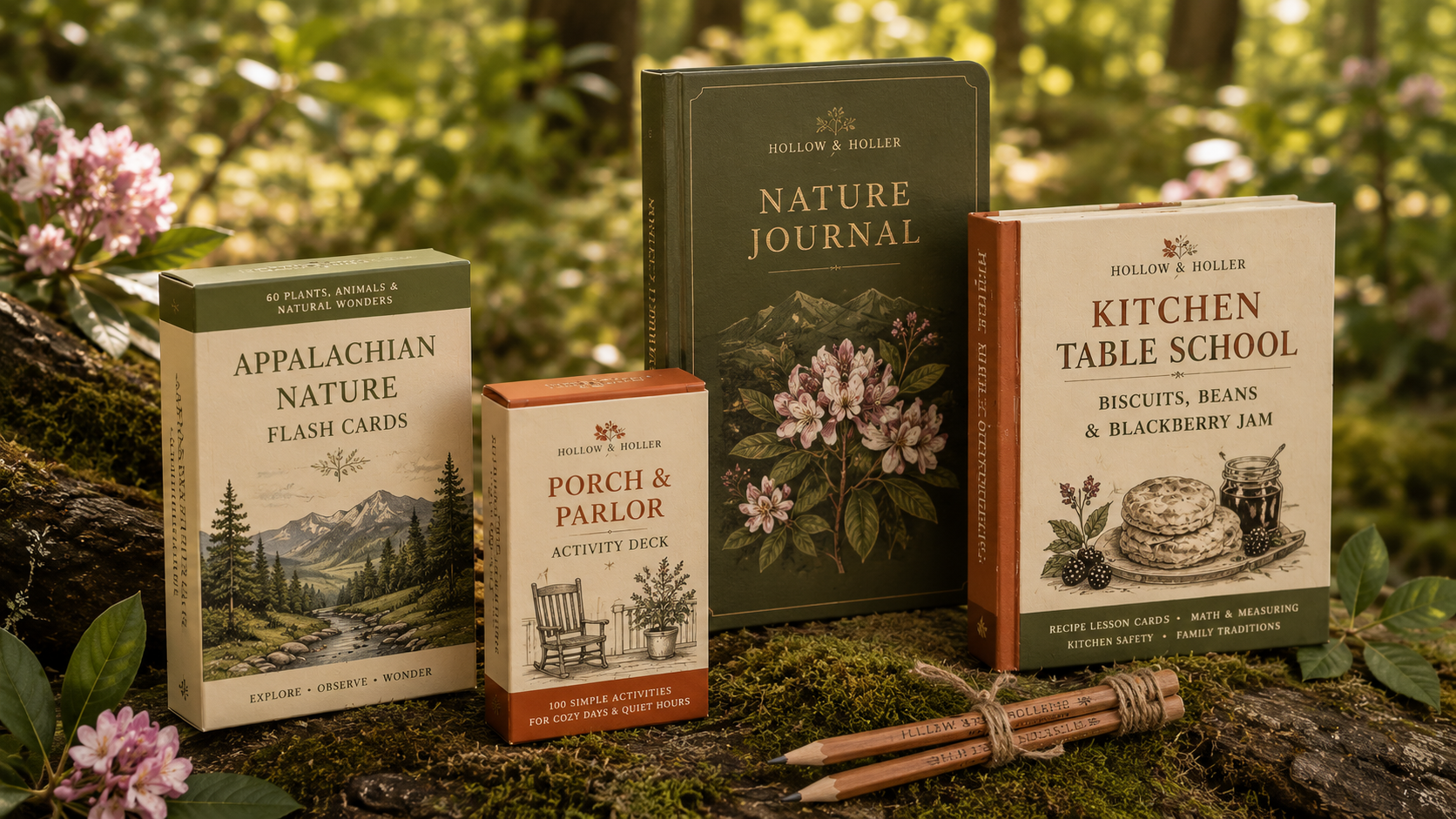
A 60-card four-season field deck of trees, birds, tracks, wildflowers, rocks, and creek life across Spring, Summer, Autumn, and Winter — paired with a spiral nature journal and a parent lesson guide. One small box that turns a 20-minute backyard walk into a real Charlotte Mason lesson, all year.
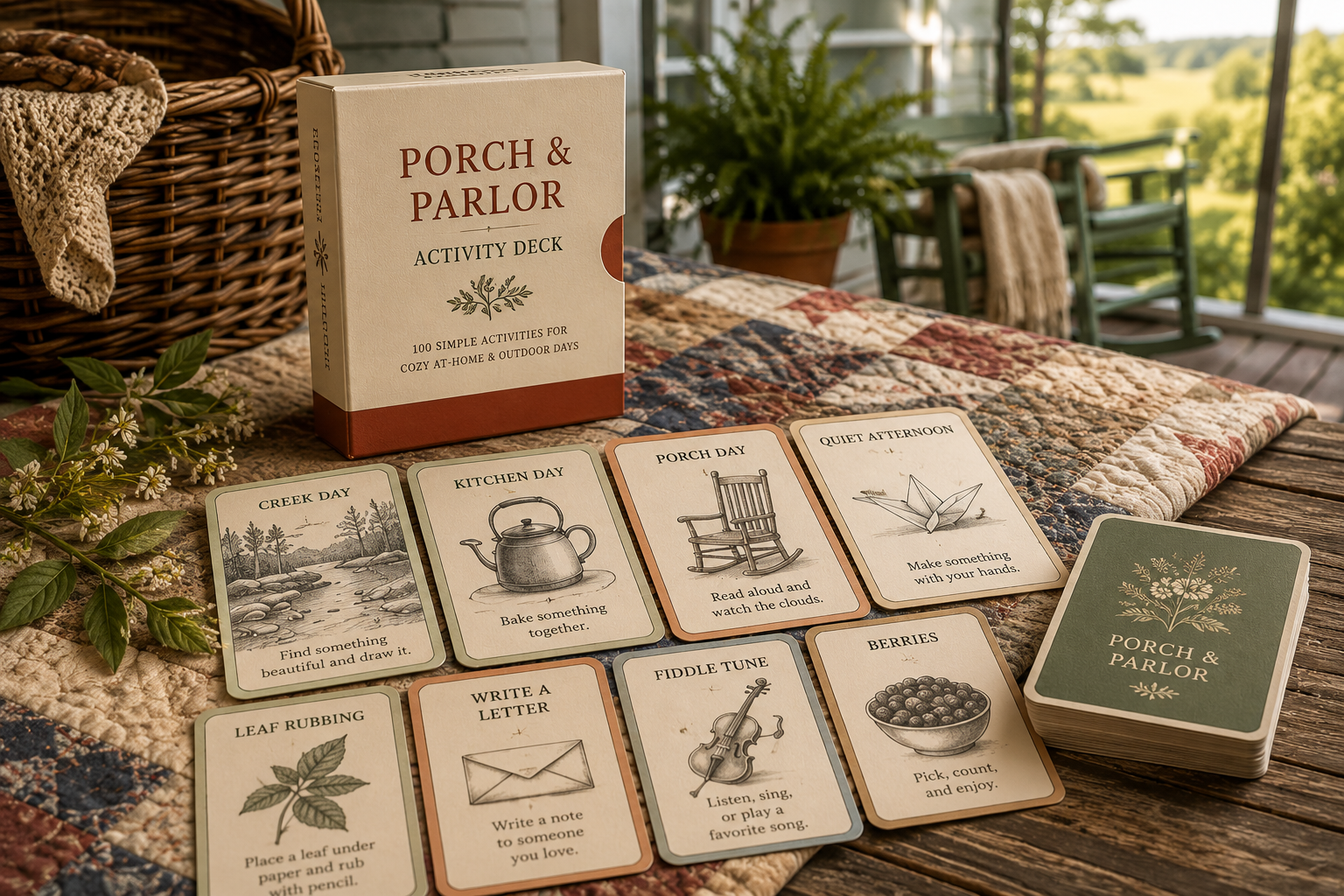
30 screen-free activity prompts for Southern homeschool families — a month of home rhythms sorted into three contexts: porch, parlor, and hush (bedtime). Cycle through in 30 days, then start over. Repetition is the magic. Pull a card; do the thing. No prep.
10 illustrated Appalachian nap-time stories featuring creatures from the field deck — the Luna Moth who only flies at night, the Hellbender hiding under creek stones, the Whippoorwill who sings only at twilight. Each story comes with a matching coloring page of the same creature. Read at nap. Color in the afternoon. Look for it on tomorrow's walk.
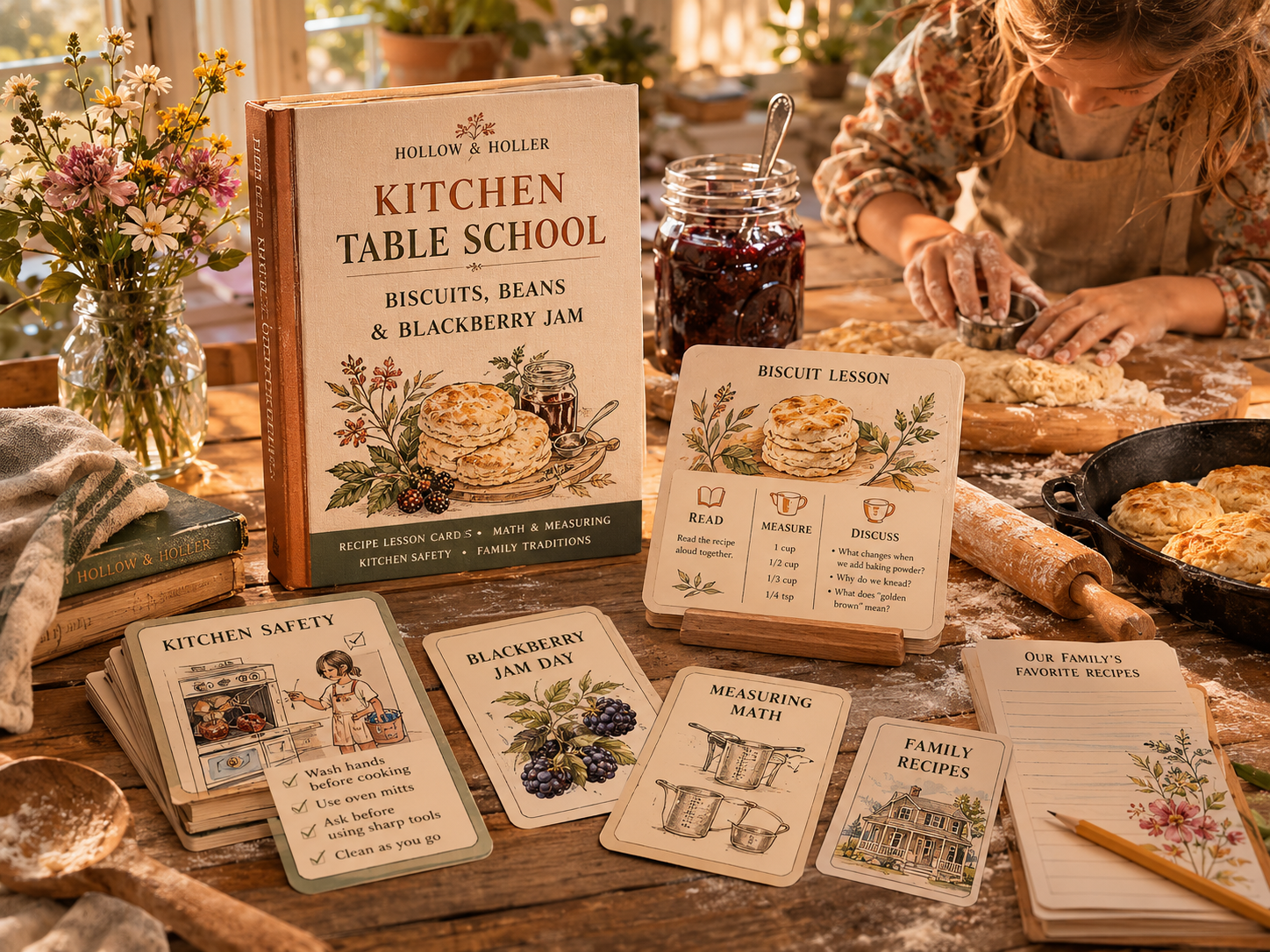
A cooking + home-economics card system for ages 6–12 — recipe lesson cards, kitchen safety cards, measuring/math cards, "read the recipe" copywork, family interview prompts, and grandparent recipe templates. Teach math, reading, responsibility, and family culture from the kitchen table.
Nature School Starter Kit + 2nd nature journal (sibling) + kid-safe magnifier + cotton tote. Same digital bonuses (Spring Walk PDF + Tales). Built for households where more than one kid wants their own journal.
If you're a homeschool parent who wants to raise observant, capable, rooted children — who'd rather your kids learn the trees, the recipes, the rhythms, and the place they're from than memorize another worksheet — this is for you. Whether you're cradle-Orthodox, Catholic, traditional Protestant, or just culturally Southern and tired of generic curriculum, the tools here are made for your family.
The launch lineup is set: Nature School, Porch & Parlor, Hollow & Holler Tales, and Kitchen Table School. Here's what comes after that.
Field deck + journal + parent guide. The validation product.
30 screen-free activity prompts — a month of home rhythms. Cheap entry; perfect gift.
Story + coloring PDF tied to the nature cards. Easy add-on.
Cooking + home-economics card system for ages 6-12.
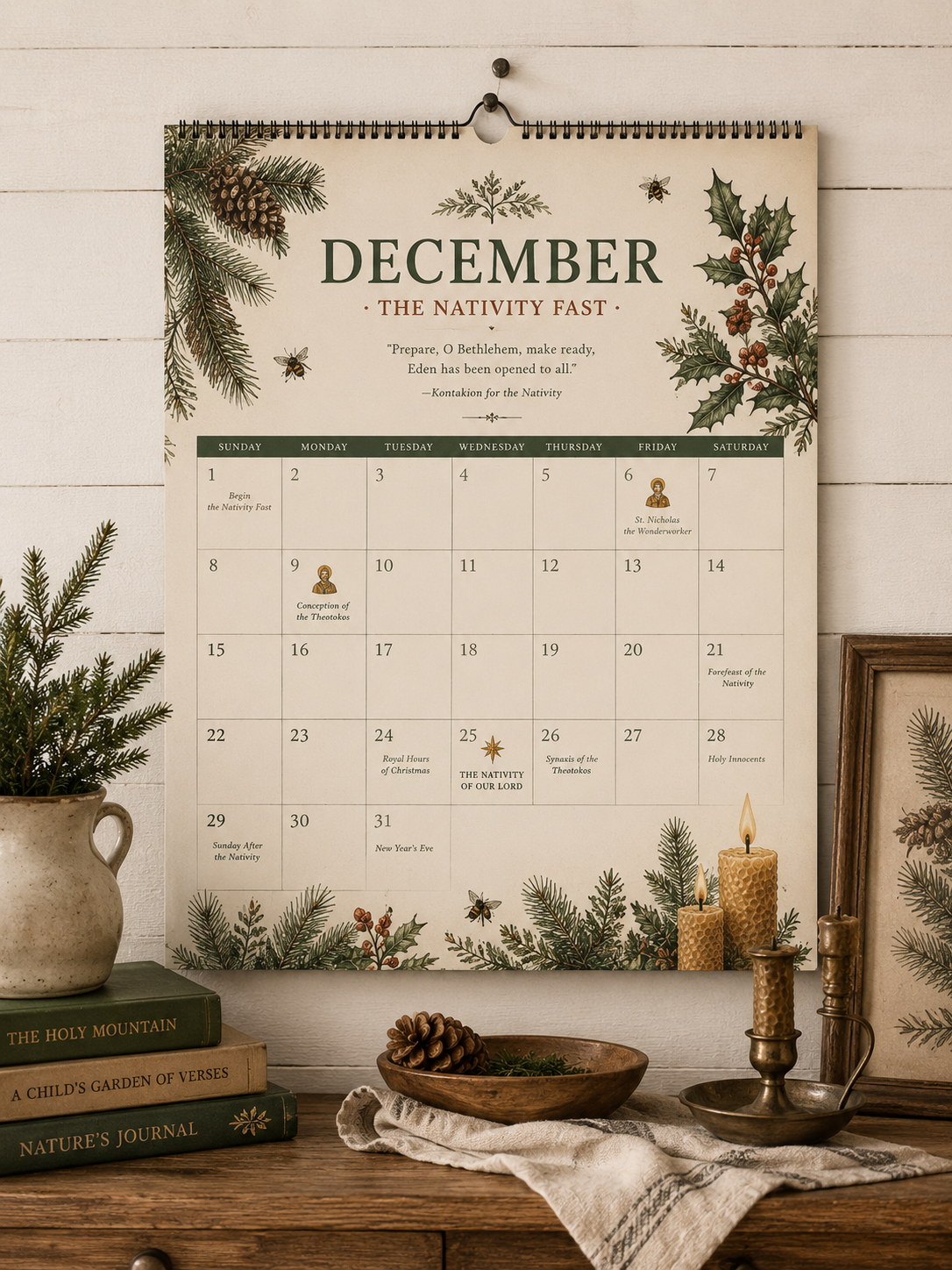
Starts as a print-friendly family PDF with holy weeks, saint days, Appalachian history notes, local feast traditions, and simple nature-watch prompts, then grows into a kid-friendly wall calendar.
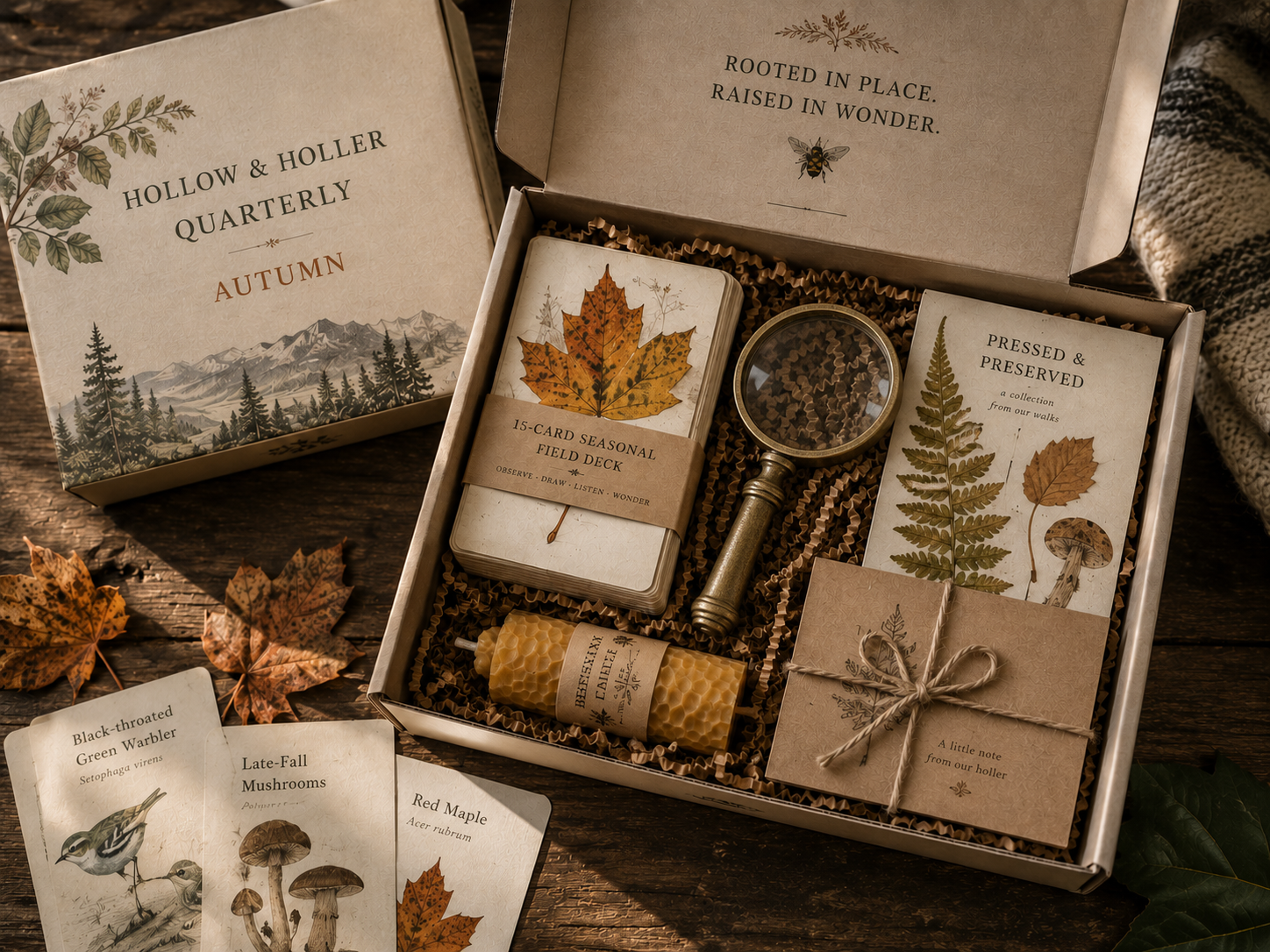
Seasonal subscription pulling from across categories. $79/quarter.
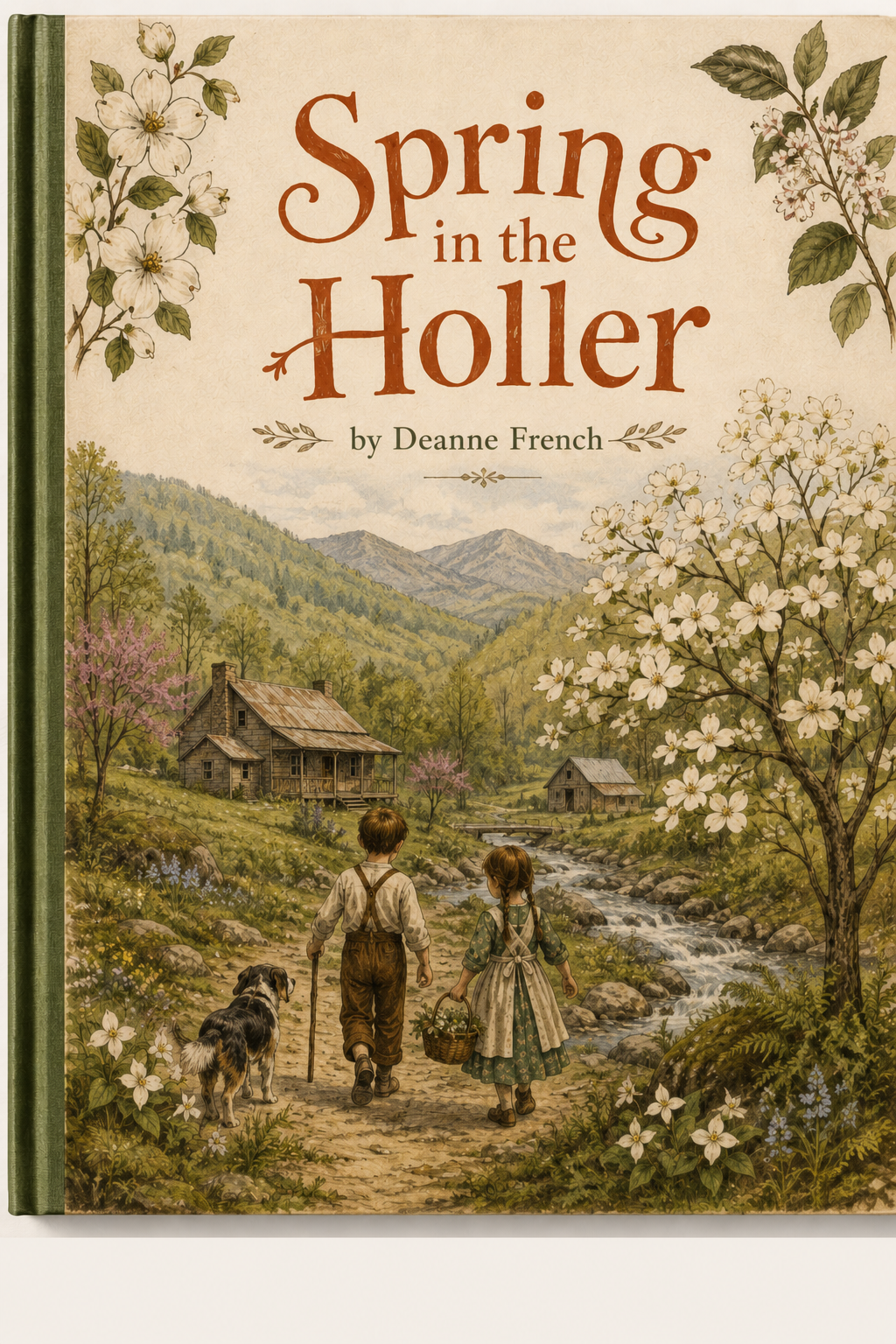
Spring · Summer · Autumn · Winter children's stories rooted in Appalachian folklore, creatures, and seasonal noticing.
Capsule line: feast day cards, tracing helpers, coloring pages, and home rhythm kits for family learning.
Pacific Northwest. Desert Southwest. Great Lakes. Gulf Coast.
Designs in progress for Phase 2 and 3 products. Reserve a kit above to lock first-batch pricing on these too.
Tell us which kit you want and your email. We'll send a confirmation with the reserve link, a free copy of A Sampler from the Hollow & Holler Schoolhouse, and one short Sunday morning email each week. Your card isn't charged until the print run is finalized in late June.
An eight-page taste of the full 64-card Nature Kit. One sample card from every season, the front-matter from the Parent Lesson Guide, a quiet excerpt from Hollow & Holler Tales, and a print-and-fold Field Notes page for the walk itself.
Your email goes to our reservation list. We'll send the Sampler PDF and your reserve link within a day.
We'll never share your email. Unsubscribe anytime.